


Why our products?
- Free shipping on orders over 49 €
- Satisfied customers
- Delivery date is specified within the product description
Do you enjoy fruit tea? Botanically speaking, it

But back to true tea. Its journey throughout the world has taken thousands of years and two very different paths. One was on land, across the Silk Road, while the other was across vast seas and through trade ports. This resulted in two different words everyone in the modern world knows: chai and tea.
| Attribute | True Tea | Fruit Infusion |
|---|---|---|
| Origin | Tea tree (Camellia sinensis) | Fruit, herbs, flowers |
| Caffeine | Yes | No |
| Taste | From mild to intense, sometimes astringent | Naturally sweet, fruity |
| Preparation | Cover with hot water, steep | Identical |
| Suitable in the evening | Mostly no (due to the caffeine content) | Yes |
| Safe for children | In limited amounts | Yes |
| Variability | Depends on processing | Depends on content |
Thousands of teas, one origin
If you were to venture into the hills around the border of Southwestern China, Myanmar, and Northeast India, you might come across a plant that all the teas in the world originate from. It's called Camellia sinensis and the Chinese apothecary Hua Tuo has been documenting habits of drinking tea made from this plant since the third century AD. During the Tang dynasty, sometime between 700-1000 AD, tea spread from China to Korea, Japan, and Vietnam.
In the 16th century, some Portuguese merchants and sailors brought it to Europe, since they suspected this aromatic treat might score some points here. And they were right. The resulting products from tea plants are influenced by the processing of the harvested tea leaves, in particular on the amount of oxidation – in other words, the time the leaf is allowed contact with oxygen.
The method for white tea is the most gentle, which makes the taste very mild. Green tea isn't oxidized at all because tea leaves are heated immediately after harvest, stopping any physical changes. Oolong is a bit different: it's oxidized only partially, so the resulting taste can vary from light and floral to bright and fruity.
Black tea undergoes the full oxidation process, which gives it its typical dark color and more intense, stronger taste. There's also the dark Pu Erh tea, which undergoes a controlled fermentation process after and gets better with age, similarly to good wine.
How can one plant have so many flavors?
In reality, there's no magic involved. Instead, we rely on a combination of nature and human effort. The resulting taste is also influenced by the area the tea plant grows in. Tea leaves from mountainous regions taste different compared to those from the lower areas, since the air is cooler in the former and the plant grows more slowly. Even the soil can make a difference, just like humidity, fogs, or the shade cast by surrounding flora.
All of this influences the aroma of the tea leaves and whether their character will be mild or intense. However, the most important part takes place after the harvest. The tea leaves are left to wither for various lengths of time. It's similar to an apple – if you cut it and leave it out in the open, it begins to brown. It's the same process with tea, or what we call oxidation.
Depending on the length of this process, which is stopped by heating the leaves, each type of tea is created. Sometimes it's stopped right away to make green tea, other times it's left longer to create black tea. And then there are special teas that require an extra step and keep going through specific processes, such as Pu Erh.
Dried fruit, flowers, and herbs
Fruit tea is a blend of dried fruit, flowers, and sometimes herbs or vegetables. These blends are also steeped in hot water. Experts call this drink tisane or infusion. The term tisane originates from the Green word for barley decoction, but nowadays, it can refer to any plant-based drink that doesn't involve tea leaves.
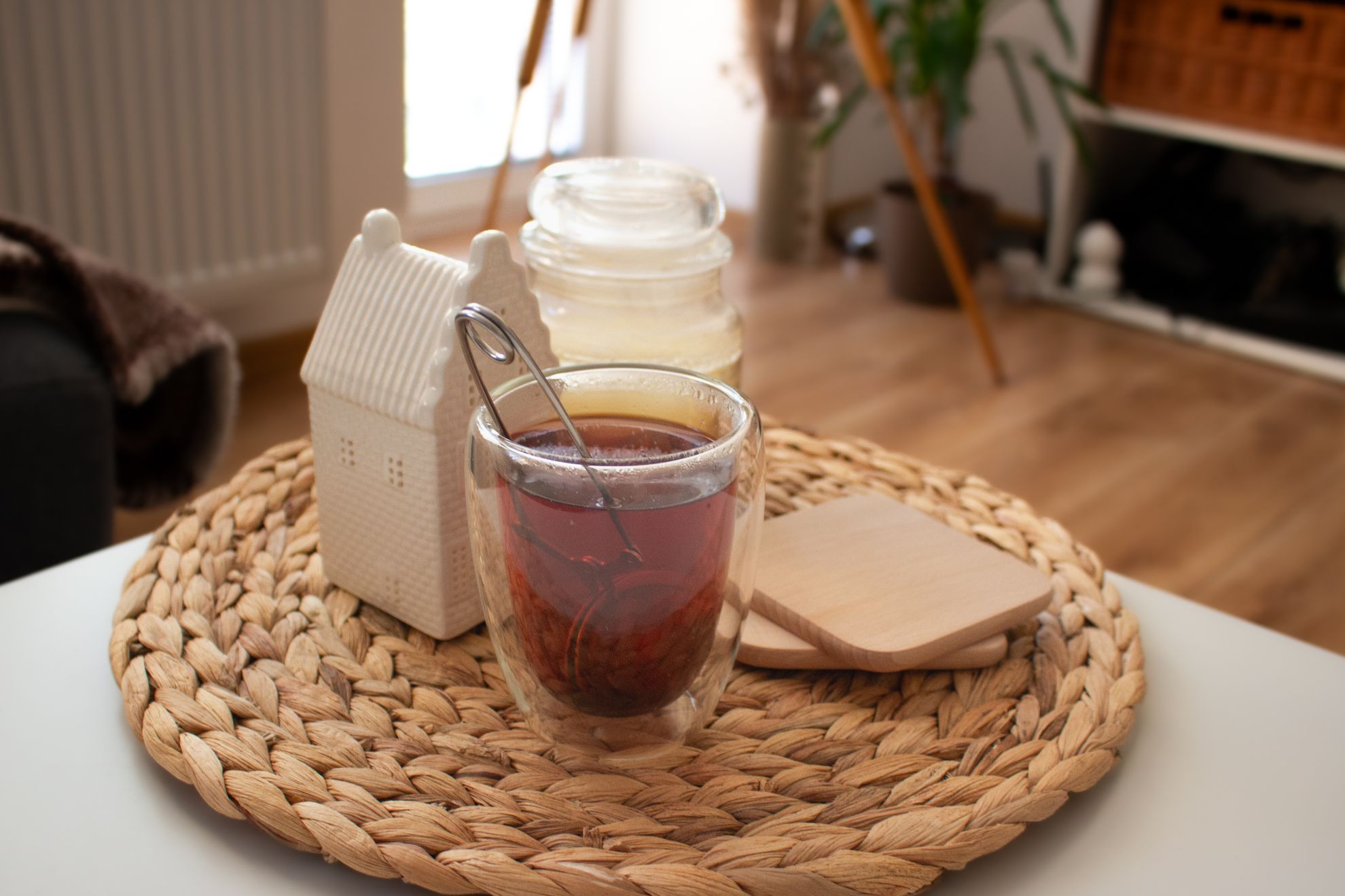
You're most likely to encounter such drinks under the names of fruit or herbal infusion. Most people in the West have been drinking these long before actual tea spread across the world. But how do these blends look?
For example, Lingonberry-Sea Buckthorn combines apples, hibiscus, carrots, orange peel, lingonberries, sea buckthorn, raspberries, and rose blooms. Song of the Caribbean is a fruit infusion made of pineapples, mango, papaya, and apples. Its aroma and golden color is more reminiscent of a tropical holiday rather than a cup of tea.
Why we still call it tea
The answer is pretty simple: making fruit infusions looks almost identical to making actual tea. You cover the blend with hot water and leave it to steep for several minutes. You use the same dishes as well as the same process. The name 'tea' gradually caught on and today, we use it almost every day.
An interesting fact is that the word tea itself has two forms, both originating from China. Depending on the route the tea was transported through, its name differed. Destinations across the sea usually wound up using some variation of 'tea', like German Tee, French thé, or Spanish té.
This pronunciation comes from the Fujian dialect in the south of China, where tea was pronounced 'te'. Merchants travelled from the south across the sea to Europe, first to the Netherlands, who called it thee, and then to the rest of the western world.
The power Netherlands held over the early European trade routes was so great that the name 'te' took root in the entire western Europe. The other pronunciation is chai, which is used in Russian, Arabian, Hindi, or Turkish. This version comes from Mandarin, where tea is pronounced as 'cha'. It spread to the world on land, using the Silk Road to get to Persia and from there further west and eastways.
One has caffeine, the other lacks it
Caffeine is an inseparable part of true tea. Black tea contains the largest amounts, green tea a bit less, and white tea has the lowest caffeine content of them all, but they all still contain some. It's the reason tea gives you energy in the morning and why we've been brewing it for centuries.
Alongside caffeine, true tea also contains small amounts of theobromine and theophylline, which are related to caffeine and also slightly energize your body. Fruit infusions, on the other hand, are naturally caffeine-free. You can have them any time of the day, even right before bed, without suffering insomnia. This makes them suitable for expectant mothers as well as children.
Lemon Temptation or Child's Dream are both caffeine and hibiscus-free, which makes them safe for children over one year. What's more, Child's Dream also contains apples, raspberries, strawberries, carrots, and beets. All ingredients were harvested in Central Europe at peak ripeness and carefully processed to retain maximum natural goodness.
Some fruit in Manu Tea blends was freeze-dried – meaning it underwent vacuum freezing in low pressure, preserving up to 90% of its nutrients as well as its full, natural aroma and flavor. The result is a drink that will, upon your first sip, surprise you with how fresh and lively it tastes.
Fruit infusions are versatile
While true tea is the focus for all enthusiasts, experts, and sommeliers, fruit infusions reach their lovers in a different way. That's especially through its availability, natural sweetness, and the fact that it's suitable for almost anyone no matter their age or the time of day.
They're sweet even without added sugar, which is good news for anyone looking for a drink that doesn't need extra sweetening and still tastes better than just hot water. Unique Mango or Vanilla Pie – which contains vanilla bits, almonds, and pineapple – are the perfect examples of distinct, bright infusions that make a spoonful of honey a pleasant bonus instead of a necessity.
Fruit infusions are also uniquely versatile. In the summer, you can pretty easily make them into a refreshing iced tea. Just brew them with hot water, add some ice cubes, and garnish with fresh fruit or a sprig of mint. Song of the Caribbean iced tea in scorching July? You couldn't find a better refreshment.
In the winter, a cup of Lingonberry-Sea Buckthorn or Lemon Temptation can warm you up and envelop the entire room in a pleasant aroma.
The name doesn't really matter
Nobody is going to force you to refer to fruit tea as an infusion. Whether you call it tea, infusion, or tisane is not the important part. The important part is to find a carefully selected content of fruit, natural ingredients, and taste that will amaze you from the first sip.
The name 'tea' may belong to the tea plant, but the cup is yours. Fill it with whatever you enjoy, whether it's the family friendly Child's Dream, refreshing Lemon Temptation, or delightfully smelling Vanilla Pie to go with your afternoon reading session.
What matters is what's on the inside, not the name.
